North Salt Lake Foundation Pros
Wall Stabilization in North Salt Lake, UT
Wall stabilization in North Salt Lake, UT. Steel anchors, carbon fiber straps, and brace systems for bowing basement walls. Free estimate.
Serving North Salt Lake and nearby communities.
A bowing basement wall doesn't fix itself, and in North Salt Lake it usually traces back to spring snowmelt pushing hydrostatic pressure against the block or poured concrete below grade. North Salt Lake Foundation Pros stabilizes walls before that pressure turns a bowed wall into a cracked one, using anchors or carbon fiber depending on how far the wall has already moved.
Most calls come in after a homeowner notices a horizontal crack running across the wall or a visible inward lean near the center. The fix depends on severity: early-stage bowing often responds to carbon fiber reinforcement, while walls that have moved an inch or more usually need steel anchors tied into the yard for active correction.
What's included
What's Included
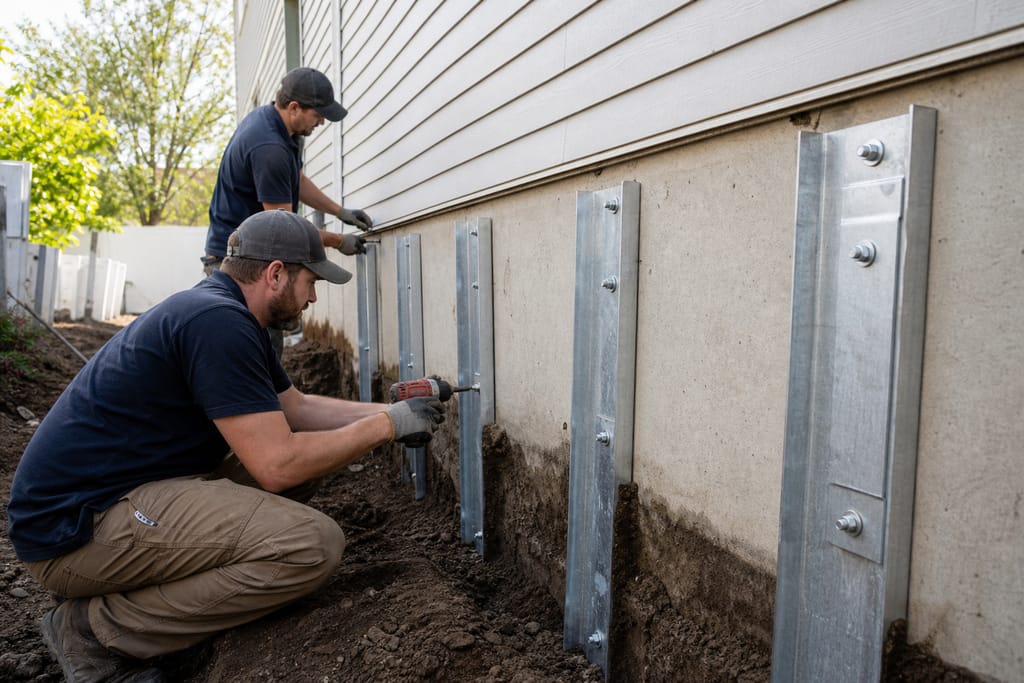
Typically included: wall inspection, pressure assessment, reinforcement material and labor, final stability check. Optional: crack sealing ahead of reinforcement, soil grading adjustments to reduce future pressure buildup. Customer prep: clear access to the basement wall and roughly 3 feet of yard space outside for anchor rod placement if anchors are used.
Want a clearer scope?
Get a Free EstimateHow it works
How Our Wall Stabilization Process Works
 Step 1
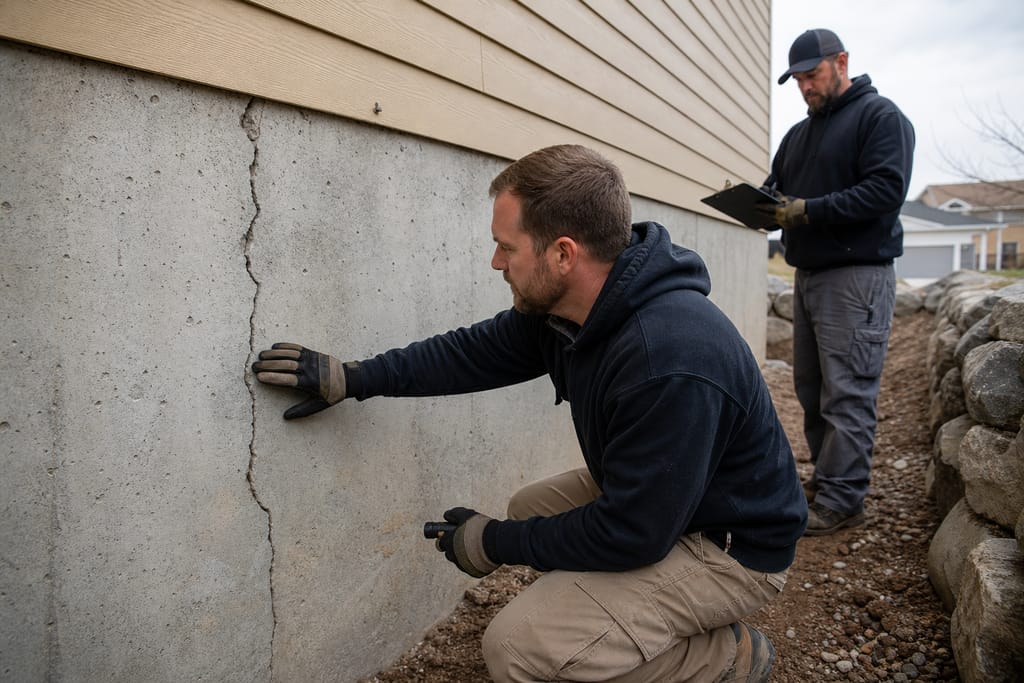
Wall Inspection
Walls are checked for bowing, horizontal cracking, or leaning that signals active movement.
 Step 2
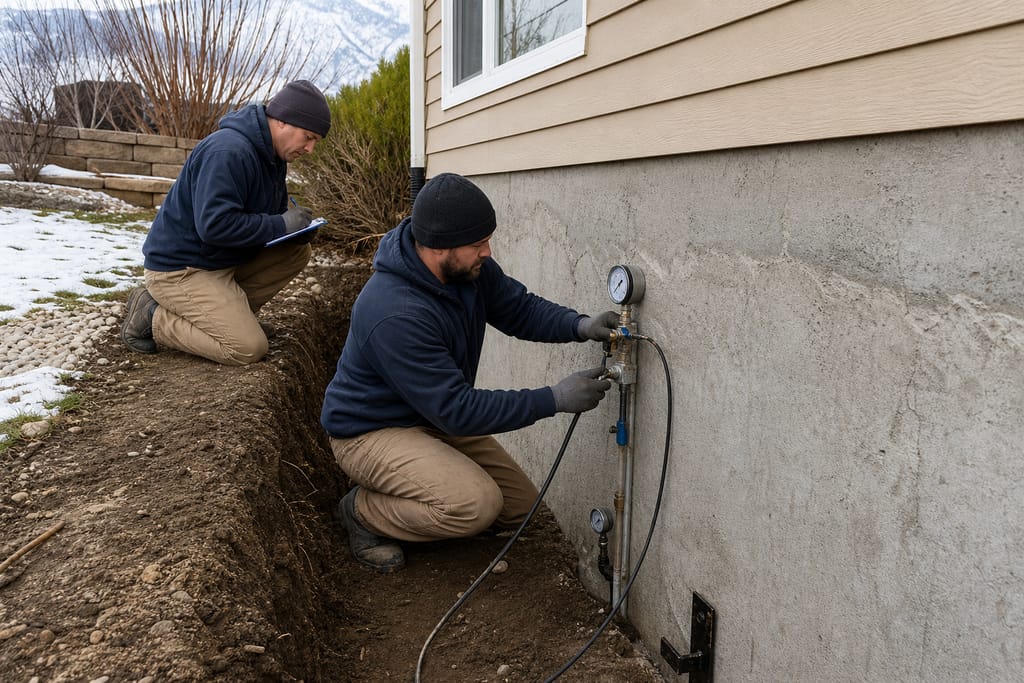
Pressure Assessment
Soil saturation and grading around the home are reviewed to find what's pushing on the wall.
 Step 3
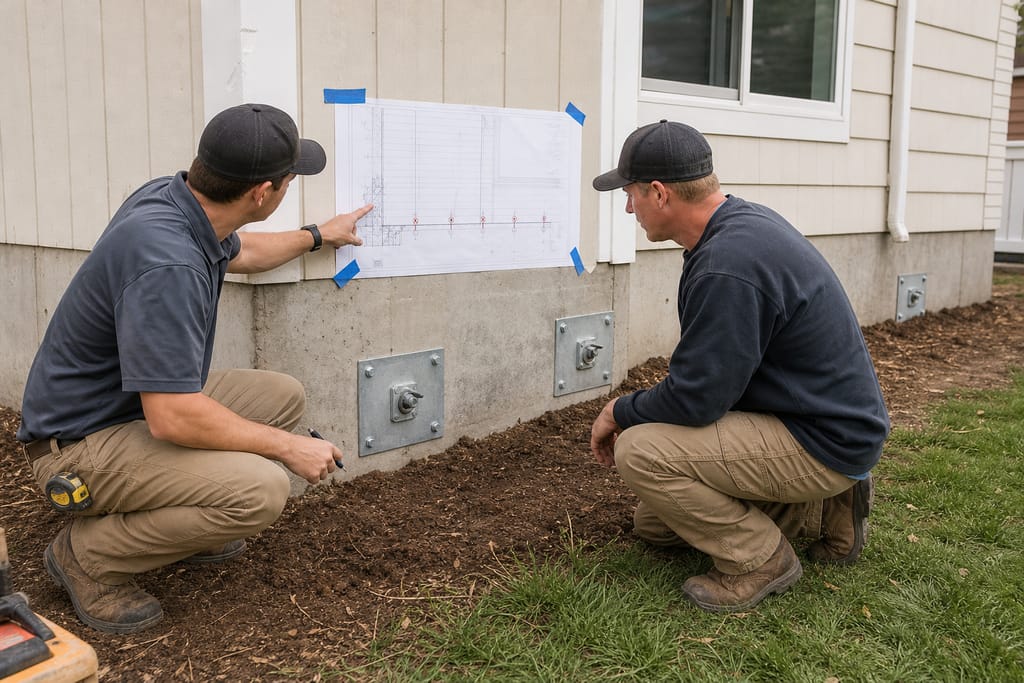
Reinforcement Planning
A method gets picked based on how far the wall has already moved, not a default option.
 Step 4
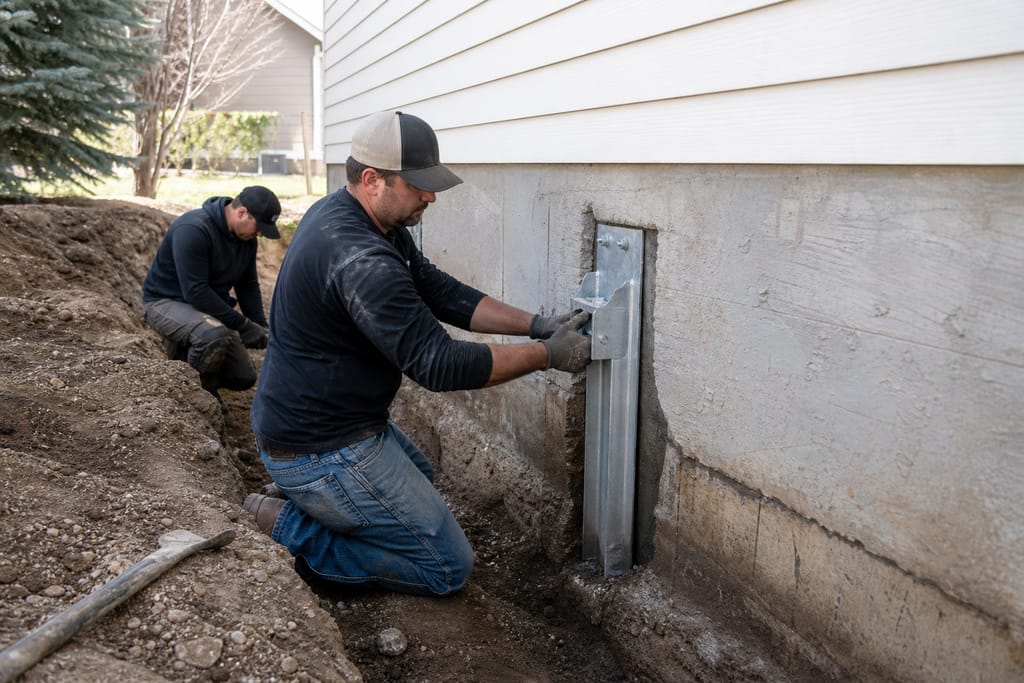
Anchor or Brace Installation
Anchors, straps, or braces go in to stop the wall from moving further.
 Step 5
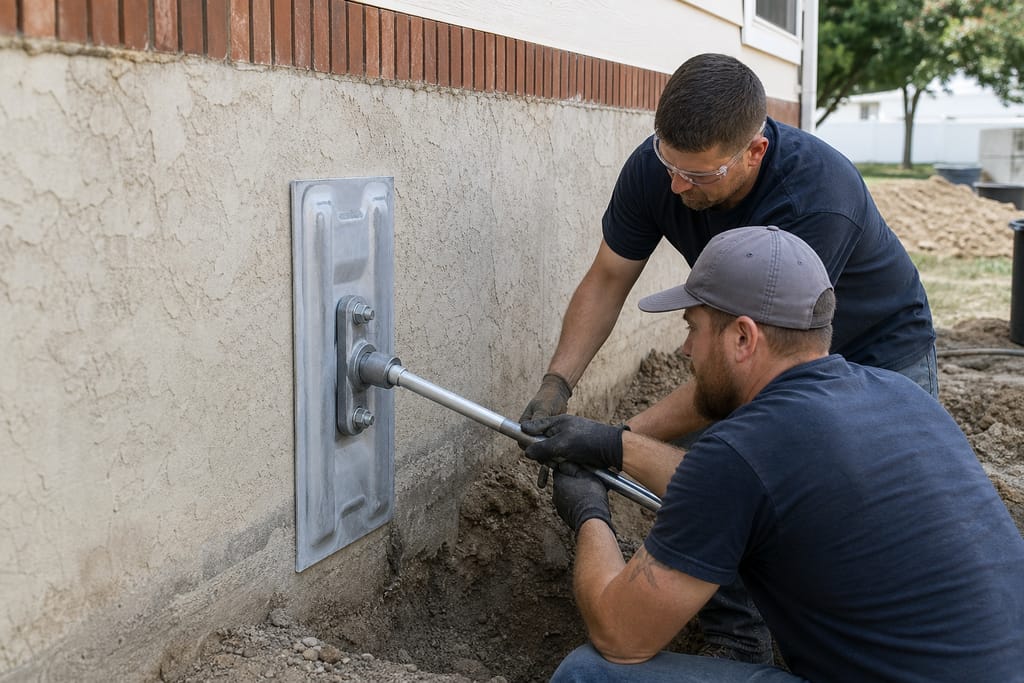
Tensioning Adjustment
Anchors are tightened over time to gradually pull the wall back toward plumb.
 Step 6
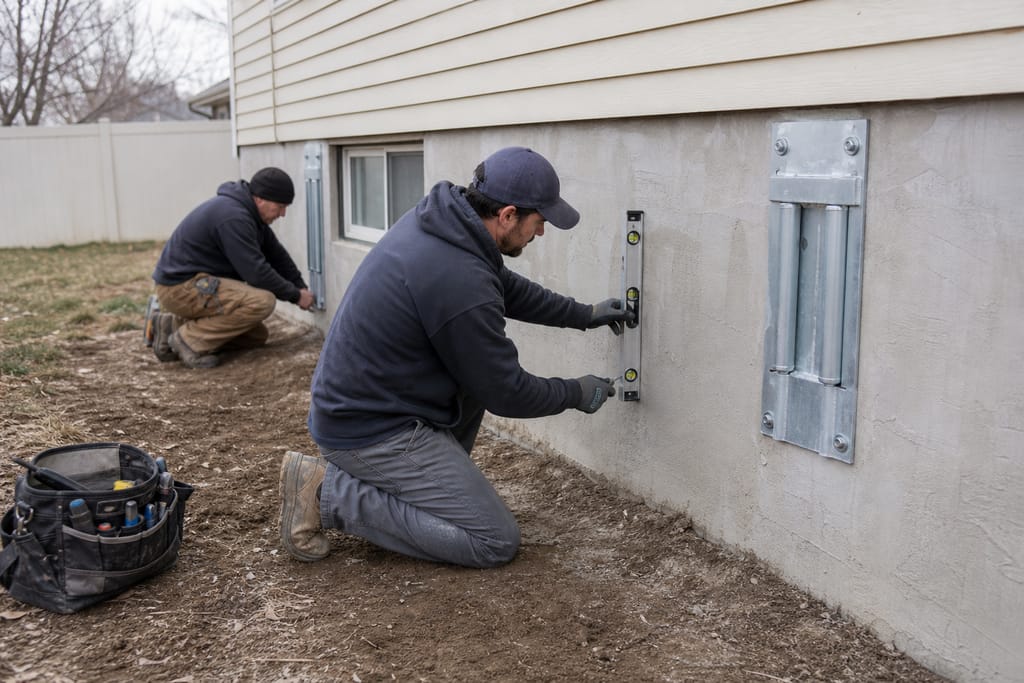
Final Inspection
The wall is rechecked for stability before the job is closed out.
Materials
Materials and Methods for Wall Stabilization
North Salt Lake basement walls see a lot of freeze-thaw cycling plus seasonal hydrostatic load, so the reinforcement method has to match how much the wall has already shifted.
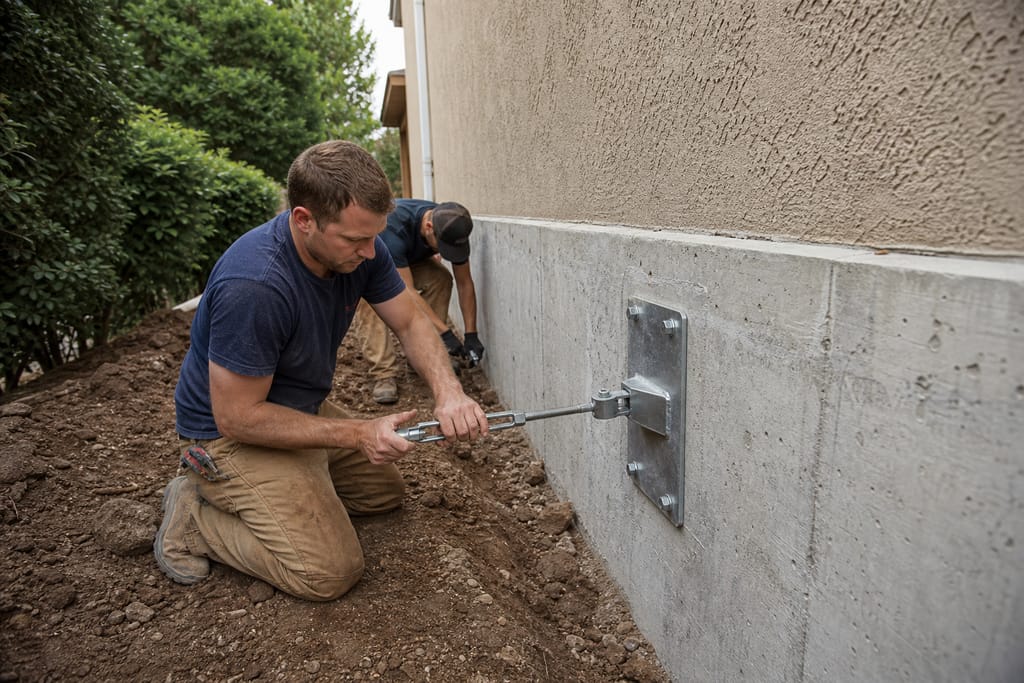
Wall Anchors
Steel anchor plates on the interior tie to earth anchors set in the yard, actively pulling a bowed wall back over months.
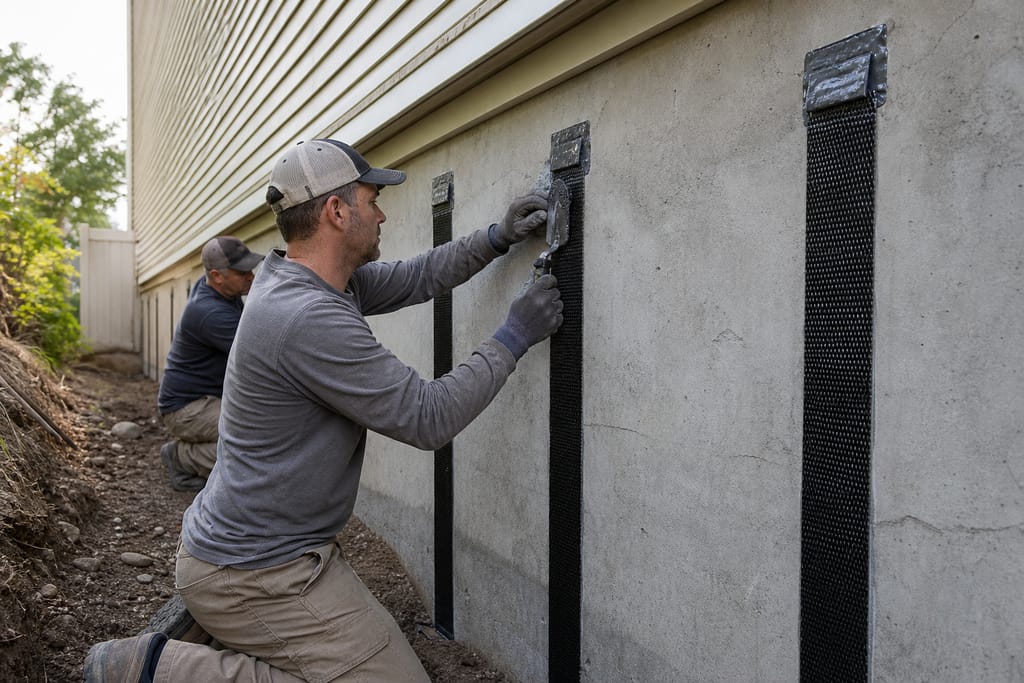
Carbon Fiber Straps
Bonded vertically to the wall for lighter cases of bowing where no excavation is needed, holding the wall at its current position.
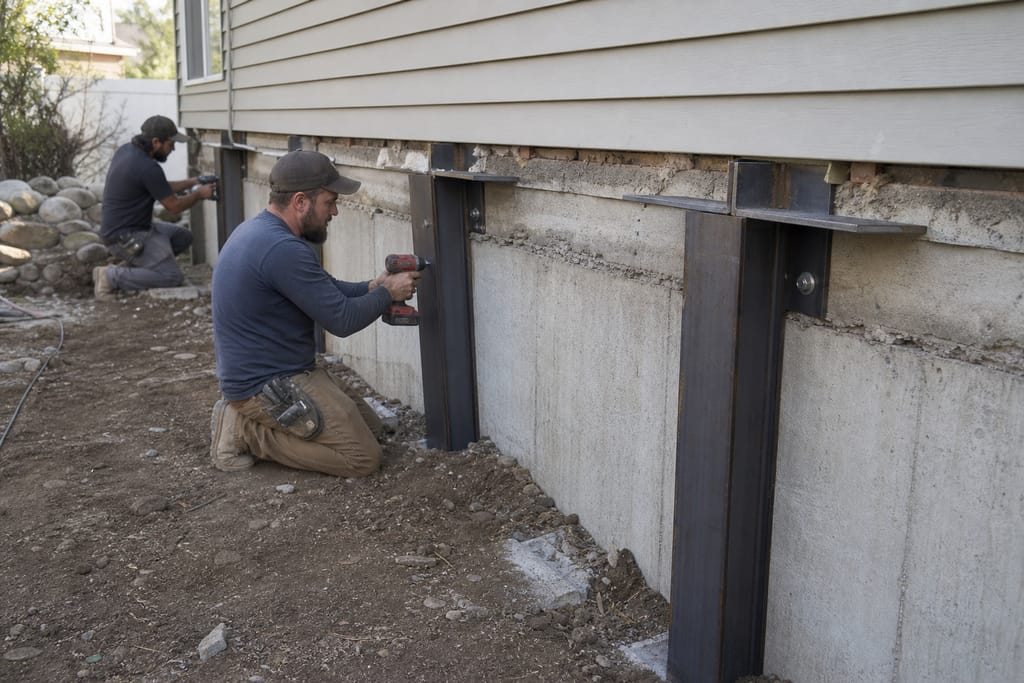
Steel I-Beams
Braced floor-to-ceiling against the wall for added rigidity when anchor access outside isn't possible.
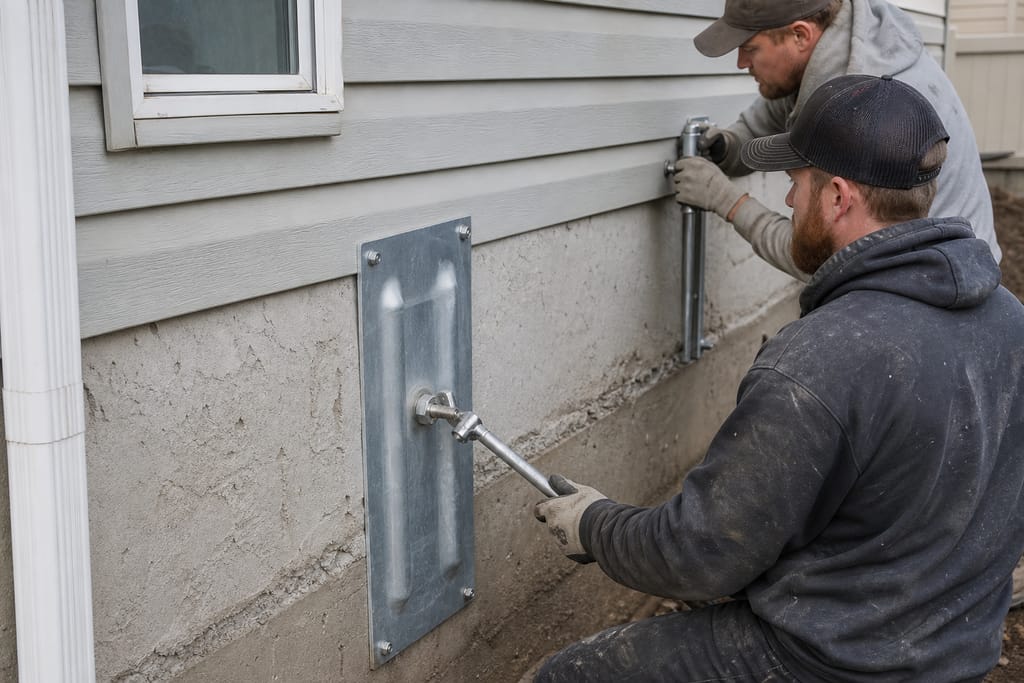
Wall Plates
Spread anchor tension evenly across the block or poured wall so pressure doesn't concentrate at one point.
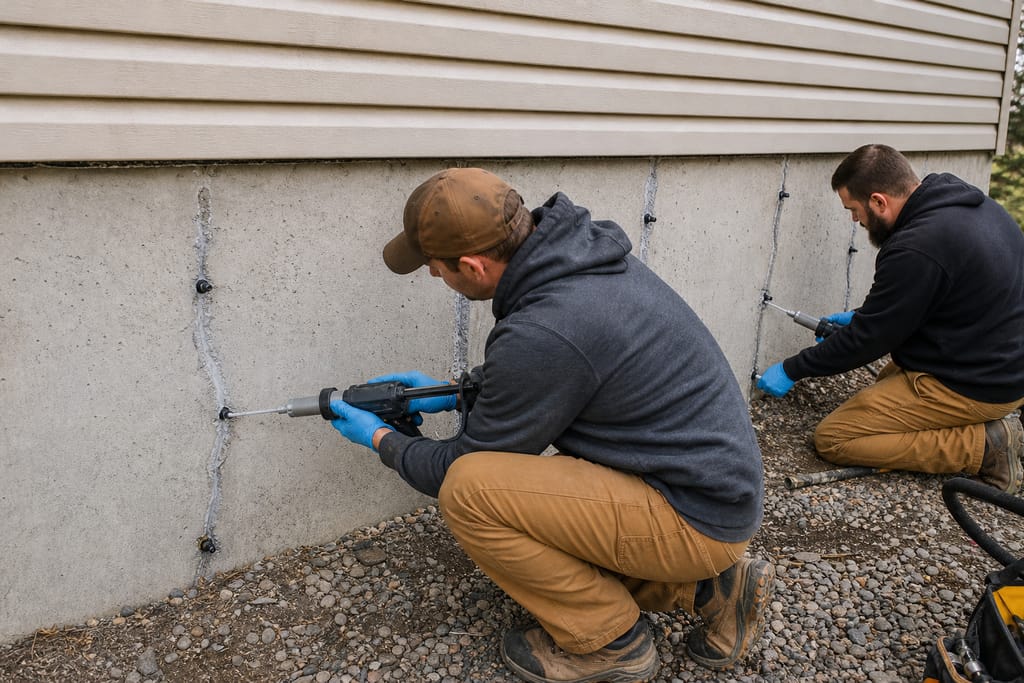
Epoxy Crack Filler
Seals any cracking along the bow line before reinforcement goes on, so moisture doesn't keep working behind it.
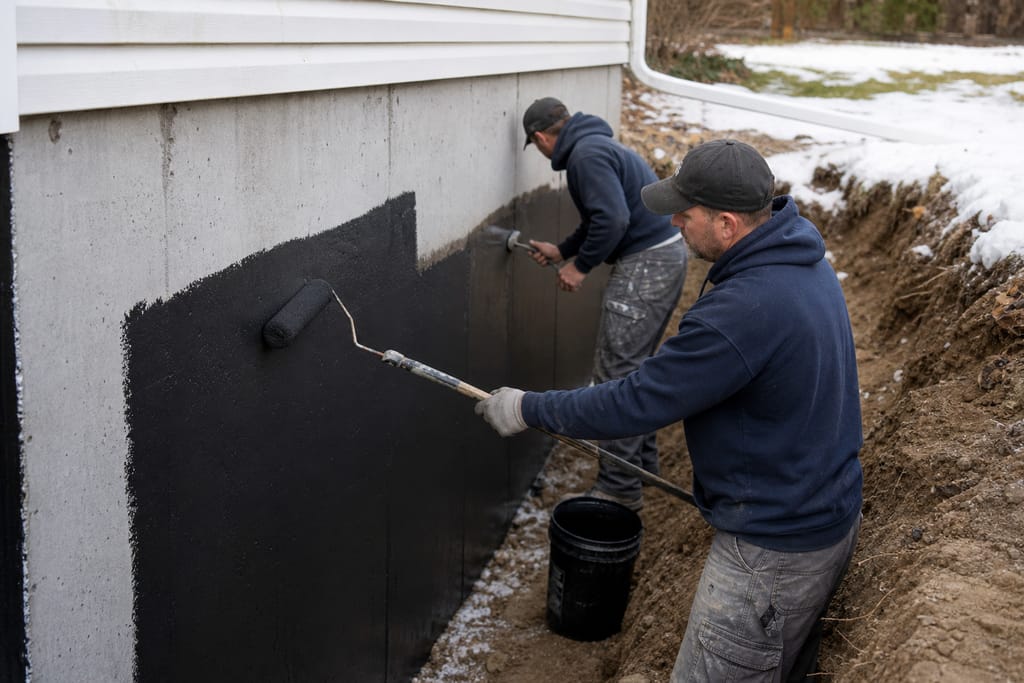
Moisture Barrier Coating
Applied after reinforcement to cut down on seepage through the same wall going forward.
Questions on materials?
Get a Free EstimateTimeline
How Long Does a Wall Stabilization Take?
- 01
Stage 1
Most wall stabilization jobs move fast once the method is picked, with the anchor tensioning happening gradually after the install visit.
- 02
Inspection and plan
same day - 03
Anchor or strap install
1 day - 04
Tensioning adjustments
over several months, brief follow-up visits
Need a schedule that fits?
Get a Free EstimateBefore & after
Before and After Wall Stabilization
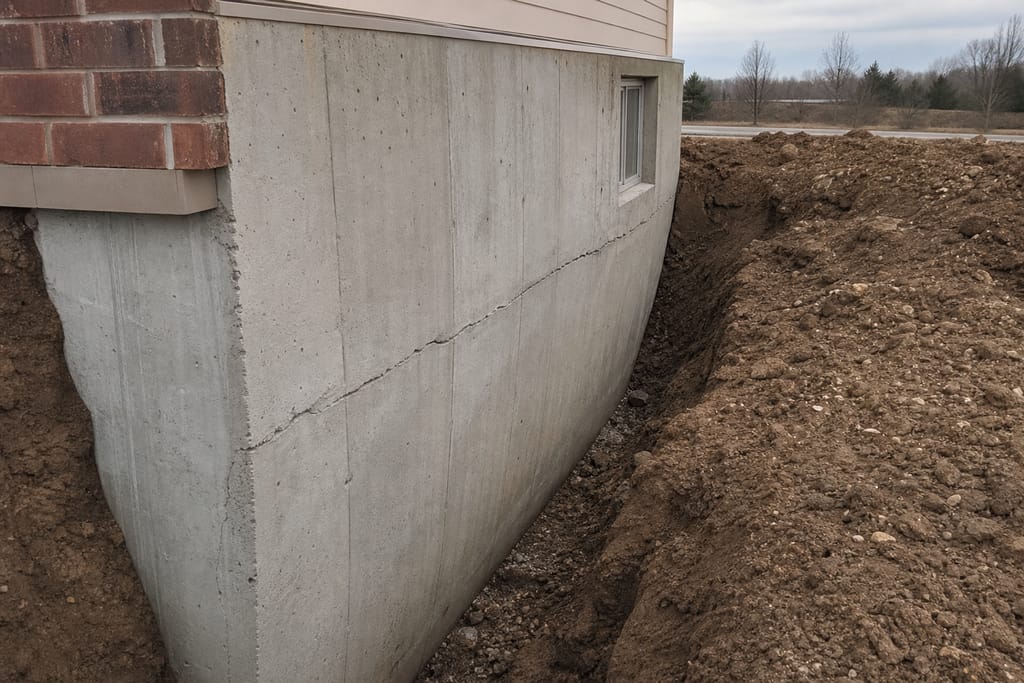
Before 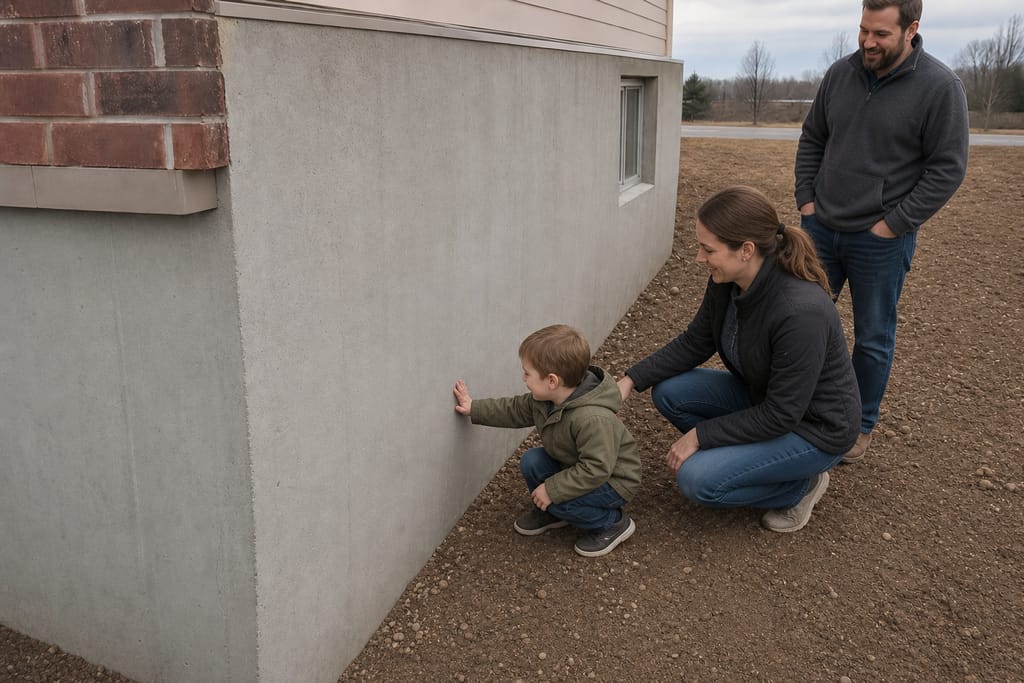
After
FAQs
Wall Stabilization FAQs
How do I know if my wall needs anchors or carbon fiber?
Carbon fiber works for walls that are still close to plumb with minor bowing. Once a wall has moved an inch or more, anchors are usually the better call because they can pull the wall back, not just hold it where it is.
How much does wall stabilization cost in North Salt Lake?
Cost depends on wall length, how many anchor or strap points are needed, and whether excavation is required. A free on-site estimate gives an exact number for your wall.
Will the wall go back to its original position?
Anchors can gradually pull a wall back toward plumb over months of tensioning. Carbon fiber holds the wall where it is rather than correcting it, so the right method matters.
Does wall stabilization stop water from coming through?
Reinforcement addresses the structural movement, not water intrusion directly. Sealant and drainage work pair with it when a wall is also leaking.
Is a small bow in the wall urgent?
Not always an emergency, but it won't improve on its own. The sooner it's addressed, the less reinforcement is usually needed.
Can I stabilize a wall myself?
No. Anchor tensioning and brace installation require engineering-level load calculations to avoid making the bow worse.
Next step
Get a Wall Stabilization Estimate in North Salt Lake
Call (435) 296-3740 or request a free estimate and we'll take a look at the wall before anything gets worse.
More services
Other Foundation Repair services
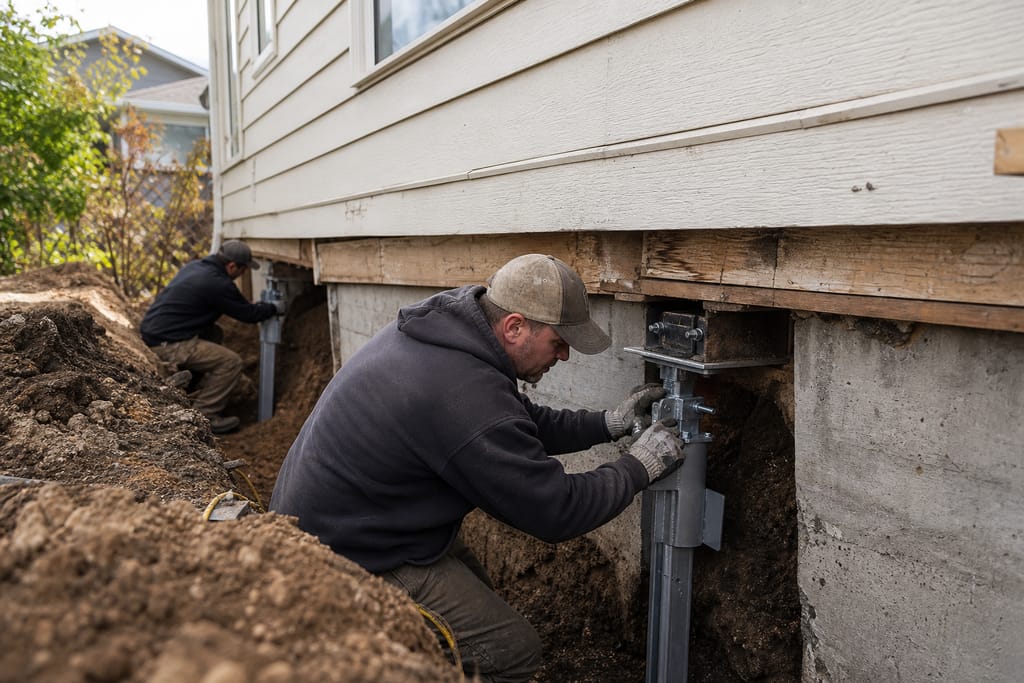
Foundation Repair
Foundation repair in North Salt Lake: pier installation, crack sealing, and wall stabilization backed by a free, written estimate.
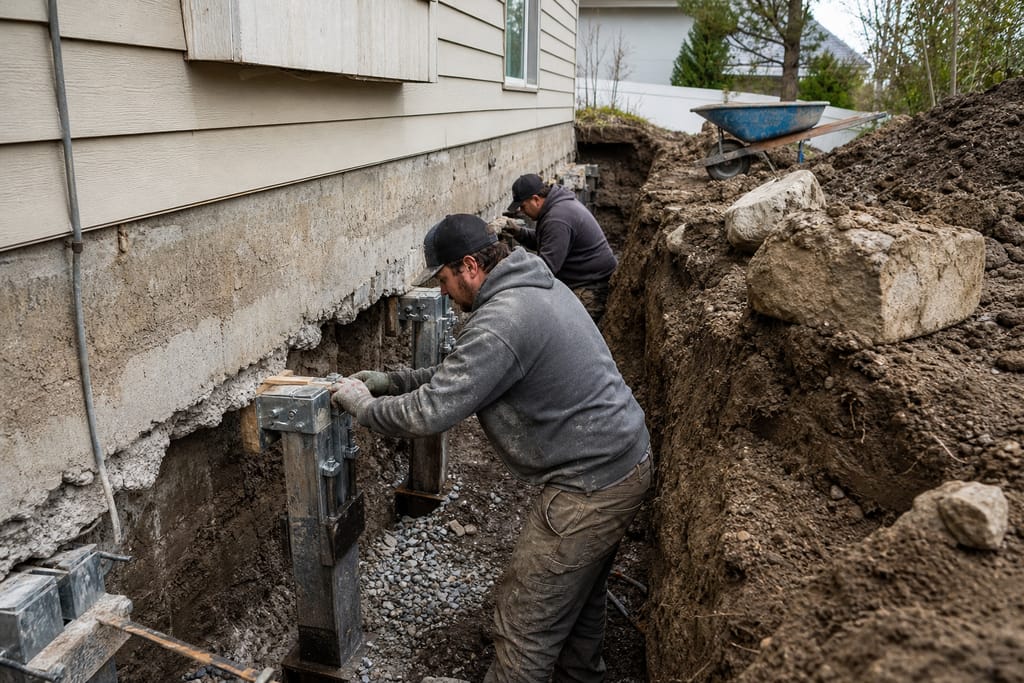
Piering and Underpinning
Piering and underpinning in North Salt Lake with steel push piers and helical piers, sized to bench or valley soil, free written estimates.
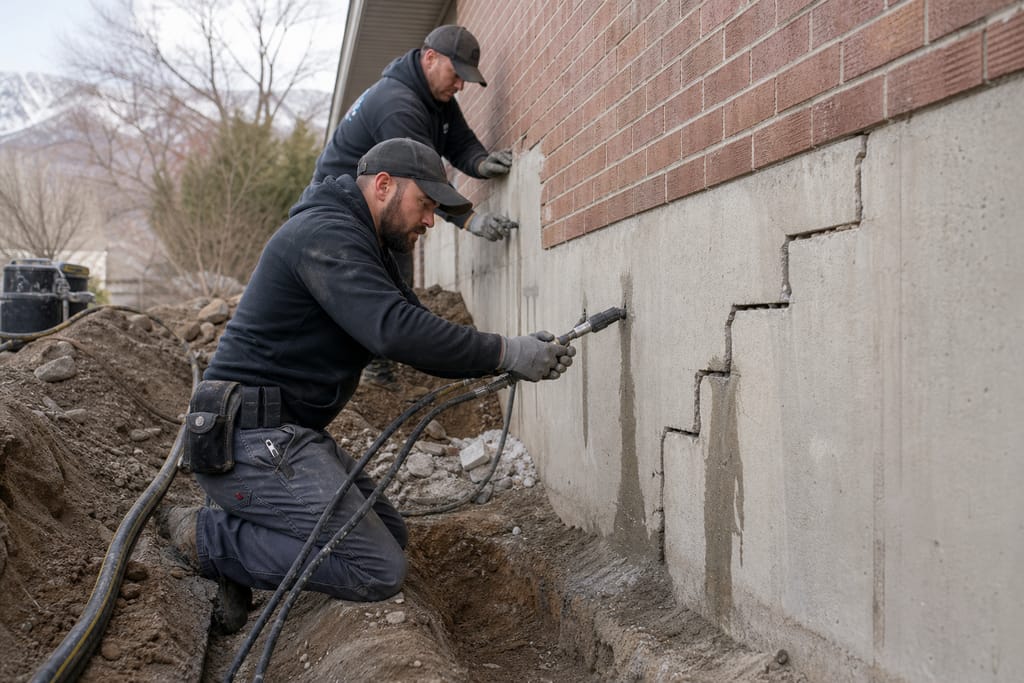
Foundation Crack Repair
Foundation crack repair in North Salt Lake: epoxy and polyurethane injection for structural and leaking cracks, free written estimates.
Ask about Wall Stabilization
Tell us about the project and how to reach you.